


CVE-2025-10294
OwnID Passwordless Login <= 1.3.4 - Authentication Bypass
Description
The OwnID Passwordless Login plugin for WordPress is vulnerable to Authentication Bypass in all versions up to, and including, 1.3.4. This is due to the plugin not properly checking if the ownid_shared_secret value is empty prior to authenticating a user via JWT. This makes it possible for unauthenticated attackers to log in as other users, including administrators, on instances where the plugin has not been fully configured yet.
INFO
Published Date :
Oct. 15, 2025, 9:15 a.m.
Last Modified :
Oct. 8, 2026, 12:10 p.m.
Remotely Exploit :
Yes !
Source :
[email protected]
Affected Products
The following products are affected by CVE-2025-10294
vulnerability.
Even if cvefeed.io is aware of the exact versions of the
products
that
are
affected, the information is not represented in the table below.
No affected product recoded yet
CVSS Scores
| Score | Version | Severity | Vector | Exploitability Score | Impact Score | Source |
|---|---|---|---|---|---|---|
| CVSS | 134c704f-9b21-4f2e-91b3-4a467353bcc0 | |||||
| CVSS 3.1 | CRITICAL | [email protected] |
Solution
- Update OwnID Passwordless Login plugin to the latest version.
- Ensure ownid_shared_secret is properly configured.
- Review JWT authentication logic for security.
Public PoC/Exploit Available at Github
CVE-2025-10294 has a 4 public
PoC/Exploit available at Github.
Go to the Public Exploits tab to see the list.
References to Advisories, Solutions, and Tools
Here, you will find a curated list of external links that provide in-depth
information, practical solutions, and valuable tools related to
CVE-2025-10294.
| URL | Resource |
|---|---|
| https://wordpress.org/plugins/ownid-passwordless-login/ | |
| https://www.wordfence.com/threat-intel/vulnerabilities/id/b8dd6008-e9b8-4a87-b1c7-0dc272850cbd?source=cve |
CWE - Common Weakness Enumeration
While CVE identifies
specific instances of vulnerabilities, CWE categorizes the common flaws or
weaknesses that can lead to vulnerabilities. CVE-2025-10294 is
associated with the following CWEs:
Common Attack Pattern Enumeration and Classification (CAPEC)
Common Attack Pattern Enumeration and Classification
(CAPEC)
stores attack patterns, which are descriptions of the common attributes and
approaches employed by adversaries to exploit the CVE-2025-10294
weaknesses.
We scan GitHub repositories to detect new proof-of-concept exploits. Following list is a collection of public exploits and proof-of-concepts, which have been published on GitHub (sorted by the most recently updated).

None

compilation of tools and advice for OSINT and OpSec

None

None
Results are limited to the first 15 repositories due to potential performance issues.
The following list is the news that have been mention
CVE-2025-10294 vulnerability anywhere in the article.

-
 The Hacker News
ThreatsDay Bulletin: Stealth Loaders, AI Chatbot Flaws AI Exploits, Docker Hack, and 15 More Stories
It's getting harder to tell where normal tech ends and malicious intent begins. Attackers are no longer just breaking in — they're blending in, hijacking everyday tools, trusted apps, and even AI assi ... Read more
-
 Daily CyberSecurity
“Webrat” Trap: Hackers Lure Junior Security Researchers with Fake GitHub Exploits
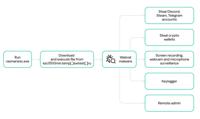
The execution flow and capabilities of rasmanesc.exe | Image: Kaspersky Labs A cunning malware campaign initially designed to trick gamers has evolved into a dangerous trap for aspiring cybersecurity ... Read more

-
 BleepingComputer
WebRAT malware spread via fake vulnerability exploits on GitHub
The WebRAT malware is now being distributed through GitHub repositories that claim to host proof-of-concept exploits for recently disclosed vulnerabilities. Previously spread through pirated software ... Read more

-
 Help Net Security
Budding infosec pros and aspiring cyber crooks targeted with fake PoC exploits
Malware peddlers are targeting infosec enthusiasts, budding security professionals, and aspiring hackers with the Webrat malware, masquerading the threat as proof-of-concept (PoC) exploits for known v ... Read more
The following table lists the changes that have been made to the
CVE-2025-10294 vulnerability over time.
Vulnerability history details can be useful for understanding the evolution of a vulnerability, and for identifying the most recent changes that may impact the vulnerability's severity, exploitability, or other characteristics.
-
CVE Translated by [email protected]
Oct. 08, 2026
Action Type Old Value New Value Changed Translation Title: OwnID Passwordless Login de victornavarro, Description: El plugin OwnID Passwordless Login para WordPress es vulnerable a omisión de autenticación en todas las versiones hasta la 1.3.4, ambas inclusive. Esto se debe a que el plugin no verifica correctamente si el valor 'ownid_shared_secret' está vacío antes de autenticar a un usuario mediante JWT. Esto hace posible que atacantes no autenticados inicien sesión como otros usuarios, incluyendo administradores, en instancias donde el plugin aún no ha sido configurado completamente. Title: OwnID Passwordless Login de victornavarro, Description: El plugin OwnID Passwordless Login para WordPress es vulnerable a omisión de autenticación en todas las versiones hasta la 1.3.4, ambas inclusive. Esto se debe a que el plugin no verifica correctamente si el valor 'ownid_shared_secret' está vacío antes de autenticar a un usuario mediante JWT. Esto hace posible que atacantes no autenticados inicien sesión como otros usuarios, incluyendo administradores, en instancias donde el plugin aún no ha sido configurado completamente. -
CVE Translated by [email protected]
Oct. 08, 2026
Action Type Old Value New Value Added Translation Title: OwnID Passwordless Login de victornavarro, Description: El plugin OwnID Passwordless Login para WordPress es vulnerable a omisión de autenticación en todas las versiones hasta la 1.3.4, ambas inclusive. Esto se debe a que el plugin no verifica correctamente si el valor 'ownid_shared_secret' está vacío antes de autenticar a un usuario mediante JWT. Esto hace posible que atacantes no autenticados inicien sesión como otros usuarios, incluyendo administradores, en instancias donde el plugin aún no ha sido configurado completamente. -
CVE Modified by [email protected]
Jun. 17, 2026
Action Type Old Value New Value Added Affected [{'vendor': 'victornavarro', 'product': 'OwnID Passwordless Login', 'versions': [{'status': 'affected', 'version': '0', 'versionType': 'semver', 'lessThanOrEqual': '1.3.4'}], 'defaultStatus': 'unaffected'}] -
CVE Modified by 134c704f-9b21-4f2e-91b3-4a467353bcc0
Jun. 17, 2026
Action Type Old Value New Value Added SSVC {'id': 'CVE-2025-10294', 'role': 'CISA Coordinator', 'options': [{'exploitation': 'none'}, {'automatable': 'yes'}, {'technicalImpact': 'total'}], 'version': '2.0.3', 'timestamp': '2025-10-15T13:23:41.054643Z'} -
New CVE Received by [email protected]
Oct. 15, 2025
Action Type Old Value New Value Added Description The OwnID Passwordless Login plugin for WordPress is vulnerable to Authentication Bypass in all versions up to, and including, 1.3.4. This is due to the plugin not properly checking if the ownid_shared_secret value is empty prior to authenticating a user via JWT. This makes it possible for unauthenticated attackers to log in as other users, including administrators, on instances where the plugin has not been fully configured yet. Added CVSS V3.1 AV:N/AC:L/PR:N/UI:N/S:U/C:H/I:H/A:H Added CWE CWE-288 Added Reference https://wordpress.org/plugins/ownid-passwordless-login/ Added Reference https://www.wordfence.com/threat-intel/vulnerabilities/id/b8dd6008-e9b8-4a87-b1c7-0dc272850cbd?source=cve