


CVE-2025-12969
CVE-2025-12969
Description
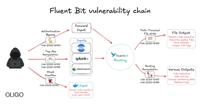
Fluent Bit in_forward input plugin does not properly enforce the security.users authentication mechanism under certain configuration conditions. This allows remote attackers with network access to the Fluent Bit instance exposing the forward input to send unauthenticated data. By bypassing authentication controls, attackers can inject forged log records, flood alerting systems, or manipulate routing decisions, compromising the authenticity and integrity of ingested logs.
INFO
Published Date :
Nov. 24, 2025, 3:15 p.m.
Last Modified :
Oct. 8, 2026, 10:10 a.m.
Remotely Exploit :
Yes !
Source :
[email protected]
CVSS Scores
| Score | Version | Severity | Vector | Exploitability Score | Impact Score | Source |
|---|---|---|---|---|---|---|
| CVSS | 134c704f-9b21-4f2e-91b3-4a467353bcc0 | |||||
| CVSS 3.1 | MEDIUM | 134c704f-9b21-4f2e-91b3-4a467353bcc0 |
Solution
- Configure authentication for the in_forward input.
- Restrict network access to the Fluent Bit instance.
- Apply configuration changes and restart Fluent Bit.
References to Advisories, Solutions, and Tools
Here, you will find a curated list of external links that provide in-depth
information, practical solutions, and valuable tools related to
CVE-2025-12969.
CWE - Common Weakness Enumeration
While CVE identifies
specific instances of vulnerabilities, CWE categorizes the common flaws or
weaknesses that can lead to vulnerabilities. CVE-2025-12969 is
associated with the following CWEs:
Common Attack Pattern Enumeration and Classification (CAPEC)
Common Attack Pattern Enumeration and Classification
(CAPEC)
stores attack patterns, which are descriptions of the common attributes and
approaches employed by adversaries to exploit the CVE-2025-12969
weaknesses.
We scan GitHub repositories to detect new proof-of-concept exploits. Following list is a collection of public exploits and proof-of-concepts, which have been published on GitHub (sorted by the most recently updated).
Results are limited to the first 15 repositories due to potential performance issues.
The following list is the news that have been mention
CVE-2025-12969 vulnerability anywhere in the article.

-
 CybersecurityNews
Critical FluentBit Vulnerabilities Let Attackers to Cloud Environments Remotely
A new chain of five critical vulnerabilities discovered in Fluent Bit has exposed billions of containerized environments to remote compromise. Fluent Bit, an open-source logging and telemetry agent de ... Read more

-
 The Register
Years-old bugs in open source tool left every major cloud open to disruption
A series of "trivial-to-exploit" vulnerabilities in Fluent Bit, an open source log collection tool that runs in every major cloud and AI lab, was left open for years, giving attackers an exploit chain ... Read more
-
 The Hacker News
New Fluent Bit Flaws Expose Cloud to RCE and Stealthy Infrastructure Intrusions
Nov 24, 2025Ravie LakshmananVulnerability / Container Security Cybersecurity researchers have discovered five vulnerabilities in Fluent Bit, an open-source and lightweight telemetry agent, that coul ... Read more
The following table lists the changes that have been made to the
CVE-2025-12969 vulnerability over time.
Vulnerability history details can be useful for understanding the evolution of a vulnerability, and for identifying the most recent changes that may impact the vulnerability's severity, exploitability, or other characteristics.
-
CVE Translated by [email protected]
Oct. 08, 2026
Action Type Old Value New Value Added Translation Title: Fluent Bit de FluentBit, Description: El plugin de entrada in_forward de Fluent Bit no aplica correctamente el mecanismo de autenticación security.users bajo ciertas condiciones de configuración. Esto permite a atacantes remotos con acceso de red a la instancia de Fluent Bit que expone la entrada forward enviar datos no autenticados. Al eludir los controles de autenticación, los atacantes pueden inyectar registros de logs falsificados, inundar sistemas de alerta o manipular decisiones de enrutamiento, comprometiendo la autenticidad y la integridad de los logs ingeridos. -
CVE Modified by [email protected]
Jun. 17, 2026
Action Type Old Value New Value Added Affected [{'vendor': 'FluentBit', 'product': 'Fluent Bit', 'versions': [{'status': 'affected', 'version': '0', 'lessThan': '4.0.13', 'versionType': 'custom'}]}] -
CVE Modified by 134c704f-9b21-4f2e-91b3-4a467353bcc0
Jun. 17, 2026
Action Type Old Value New Value Added SSVC {'id': 'CVE-2025-12969', 'role': 'CISA Coordinator', 'options': [{'exploitation': 'none'}, {'automatable': 'yes'}, {'technicalImpact': 'partial'}], 'version': '2.0.3', 'timestamp': '2025-11-24T18:02:22.489781Z'} -
CVE Modified by [email protected]
Nov. 28, 2025
Action Type Old Value New Value Added Reference https://fluentbit.io/blog/2025/10/28/security-vulnerabilities-addressed-in-fluent-bit-v4.1-and-backported-to-v4.0/ Added Reference https://www.oligo.security/blog/critical-vulnerabilities-in-fluent-bit-expose-cloud-environments-to-remote-takeover Removed Reference https://fluentbit.io/announcements/v4.1.0/ Removed Reference Type https://fluentbit.io/announcements/v4.1.0/ Types: Release Notes -
Initial Analysis by [email protected]
Nov. 28, 2025
Action Type Old Value New Value Added CWE CWE-306 Added CPE Configuration OR *cpe:2.3:a:treasuredata:fluent_bit:4.1.0:*:*:*:*:*:*:* Added Reference Type CERT/CC: https://fluentbit.io/announcements/v4.1.0/ Types: Release Notes -
CVE Modified by 134c704f-9b21-4f2e-91b3-4a467353bcc0
Nov. 24, 2025
Action Type Old Value New Value Added CVSS V3.1 AV:N/AC:L/PR:N/UI:N/S:U/C:L/I:L/A:N -
New CVE Received by [email protected]
Nov. 24, 2025
Action Type Old Value New Value Added Description Fluent Bit in_forward input plugin does not properly enforce the security.users authentication mechanism under certain configuration conditions. This allows remote attackers with network access to the Fluent Bit instance exposing the forward input to send unauthenticated data. By bypassing authentication controls, attackers can inject forged log records, flood alerting systems, or manipulate routing decisions, compromising the authenticity and integrity of ingested logs. Added Reference https://fluentbit.io/announcements/v4.1.0/