


CVE-2025-34067
Hikvision Integrated Security Management Platform Remote Command Execution via applyCT Fastjson
Description
An unauthenticated remote command execution vulnerability exists in the applyCT component of the Hikvision Integrated Security Management Platform due to the use of a vulnerable version of the Fastjson library. The endpoint /bic/ssoService/v1/applyCT deserializes untrusted user input, allowing an attacker to trigger Fastjson's auto-type feature to load arbitrary Java classes. By referencing a malicious class via an LDAP URL, an attacker can achieve remote code execution on the underlying system. Exploitation evidence was observed by the Shadowserver Foundation on 2025-02-05 UTC.
INFO
Published Date :
July 2, 2025, 2:15 p.m.
Last Modified :
June 17, 2026, 9:13 a.m.
Remotely Exploit :
Yes !
Source :
[email protected]
CVSS Scores
| Score | Version | Severity | Vector | Exploitability Score | Impact Score | Source |
|---|---|---|---|---|---|---|
| CVSS | 134c704f-9b21-4f2e-91b3-4a467353bcc0 | |||||
| CVSS 4.0 | CRITICAL | [email protected] |
Solution
- Update the Fastjson library to the latest secure version.
- Remove or sanitize all user-controlled input.
- Disable Fastjson's auto-type feature if possible.
- Review and secure all serialization/deserialization mechanisms.
References to Advisories, Solutions, and Tools
Here, you will find a curated list of external links that provide in-depth
information, practical solutions, and valuable tools related to
CVE-2025-34067.
CWE - Common Weakness Enumeration
While CVE identifies
specific instances of vulnerabilities, CWE categorizes the common flaws or
weaknesses that can lead to vulnerabilities. CVE-2025-34067 is
associated with the following CWEs:
Common Attack Pattern Enumeration and Classification (CAPEC)
Common Attack Pattern Enumeration and Classification
(CAPEC)
stores attack patterns, which are descriptions of the common attributes and
approaches employed by adversaries to exploit the CVE-2025-34067
weaknesses.
We scan GitHub repositories to detect new proof-of-concept exploits. Following list is a collection of public exploits and proof-of-concepts, which have been published on GitHub (sorted by the most recently updated).
Results are limited to the first 15 repositories due to potential performance issues.
The following list is the news that have been mention
CVE-2025-34067 vulnerability anywhere in the article.

-
 Daily CyberSecurity
High-Severity RCE Flaw in Atlassian Bamboo Threatens CI/CD Environments
Atlassian has sounded the alarm for users of its Bamboo Data Center, uncovering a high-severity Remote Code Execution (RCE) vulnerability that could allow attackers to seize control of development env ... Read more

-
 CybersecurityNews
Iran-Linked Cyber Campaigns Converge With Electronic and Psychological Warfare as Regional Conflict Escalates
On February 28, 2026, a joint US-Israeli military operation launched strikes inside Iran, opening a conflict that rapidly extended into cyberspace. Iran responded with ballistic missiles and drone str ... Read more

-
CybersecurityNews
Iranian Cyber Ops Maintain US Network Footholds, Target Cameras for Regional Surveillance
Iran’s cyber operations took a sharp turn in early 2026, with state-linked threat actors quietly embedding themselves inside US and Canadian networks while also targeting internet-connected surveillan ... Read more

-
 The Hacker News
Iran-Linked MuddyWater Hackers Target U.S. Networks With New Dindoor Backdoor
New research from Broadcom's Symantec and Carbon Black Threat Hunter Team has discovered evidence of an Iranian hacking group embedding itself in several U.S. companies' networks, including banks, air ... Read more

-
Daily CyberSecurity
Eyes on the Front: Iranian Threat Actors Weaponize IP Cameras in Middle East Conflict
As modern warfare increasingly moves into the digital realm, a new report from Check Point Research (CPR) reveals how cyber operations are being used as a “force multiplier” for kinetic military actio ... Read more

-
CybersecurityNews
Threat Actors Intensify Targeting of IP Cameras Across Middle East Amid Ongoing Conflict
Cyberattacks linked to Iranian threat actors are taking on a new and alarming form in the ongoing Middle East conflict. Since late February 2026, a coordinated campaign to compromise internet-connecte ... Read more

-
 The Register
'Hundreds' of Iranian hacking attempts have hit surveillance cameras since the missile strikes
Multiple Iranian hacking crews have been targeting internet-connected surveillance cameras across Israel and other Middle Eastern countries since the war started on February 28, according to Check Poi ... Read more

-
Cyber Security News
Critical HIKVISION applyCT Vulnerability Exposes Devices to Code Execution Attacks
A critical security vulnerability has been discovered in HIKVISION’s applyCT component, part of the HikCentral Integrated Security Management Platform, that allows attackers to execute arbitrary code ... Read more

-
Daily CyberSecurity
Apache Under Attack: Critical RCE Flaws in Tomcat & Camel Spark Thousands of Exploit Attempts
In a recent deep-dive analysis, Palo Alto Networks’ Unit 42 revealed disturbing insights into a surge of cyberattacks targeting critical vulnerabilities in Apache Tomcat and Apache Camel. These flaws, ... Read more
-
Daily CyberSecurity
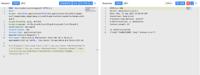
Critical HIKVISION applyCT Flaw (CVE-2025-34067, CVSS 10.0): Unauthenticated RCE Via Fastjson
Image: PeiQi0 A newly disclosed vulnerability in HIKVISION’s widely deployed security management platform, applyCT (previously known as HikCentral), has put countless surveillance and monitoring infra ... Read more
The following table lists the changes that have been made to the
CVE-2025-34067 vulnerability over time.
Vulnerability history details can be useful for understanding the evolution of a vulnerability, and for identifying the most recent changes that may impact the vulnerability's severity, exploitability, or other characteristics.
-
CVE Modified by [email protected]
Jun. 17, 2026
Action Type Old Value New Value Added Affected [{'vendor': 'Hikvision', 'modules': ['/bic/ssoService/v1/applyCT HTTP endpoint'], 'product': 'Integrated Security Management Platform', 'versions': [{'status': 'affected', 'version': '0'}], 'defaultStatus': 'unaffected'}] -
CVE Modified by 134c704f-9b21-4f2e-91b3-4a467353bcc0
Jun. 17, 2026
Action Type Old Value New Value Added SSVC {'id': 'CVE-2025-34067', 'role': 'CISA Coordinator', 'options': [{'exploitation': 'poc'}, {'automatable': 'no'}, {'technicalImpact': 'partial'}], 'version': '2.0.3', 'timestamp': '2025-07-02T20:25:01.186074Z'} -
CVE Modified by [email protected]
Nov. 20, 2025
Action Type Old Value New Value Changed Description An unauthenticated remote command execution vulnerability exists in the applyCT component of the Hikvision Integrated Security Management Platform due to the use of a vulnerable version of the Fastjson library. The endpoint /bic/ssoService/v1/applyCT deserializes untrusted user input, allowing an attacker to trigger Fastjson's auto-type feature to load arbitrary Java classes. By referencing a malicious class via an LDAP URL, an attacker can achieve remote code execution on the underlying system. Exploitation evidence was observed by the Shadowserver Foundation on 2025-02-08 UTC. An unauthenticated remote command execution vulnerability exists in the applyCT component of the Hikvision Integrated Security Management Platform due to the use of a vulnerable version of the Fastjson library. The endpoint /bic/ssoService/v1/applyCT deserializes untrusted user input, allowing an attacker to trigger Fastjson's auto-type feature to load arbitrary Java classes. By referencing a malicious class via an LDAP URL, an attacker can achieve remote code execution on the underlying system. Exploitation evidence was observed by the Shadowserver Foundation on 2025-02-05 UTC. -
CVE Modified by [email protected]
Nov. 13, 2025
Action Type Old Value New Value Changed Description An unauthenticated remote command execution vulnerability exists in the applyCT component of the Hikvision Integrated Security Management Platform due to the use of a vulnerable version of the Fastjson library. The endpoint /bic/ssoService/v1/applyCT deserializes untrusted user input, allowing an attacker to trigger Fastjson's auto-type feature to load arbitrary Java classes. By referencing a malicious class via an LDAP URL, an attacker can achieve remote code execution on the underlying system. An unauthenticated remote command execution vulnerability exists in the applyCT component of the Hikvision Integrated Security Management Platform due to the use of a vulnerable version of the Fastjson library. The endpoint /bic/ssoService/v1/applyCT deserializes untrusted user input, allowing an attacker to trigger Fastjson's auto-type feature to load arbitrary Java classes. By referencing a malicious class via an LDAP URL, an attacker can achieve remote code execution on the underlying system. Exploitation evidence was observed by the Shadowserver Foundation on 2025-02-08 UTC. Removed CWE CWE-917 -
CVE Modified by [email protected]
Jul. 07, 2025
Action Type Old Value New Value Added Reference https://vulncheck.com/advisories/hikvision-ismp-rce-applyct Removed Reference https://vulncheck.com/advisories/hikvision-hik-central-remote-command-execution -
New CVE Received by [email protected]
Jul. 02, 2025
Action Type Old Value New Value Added Description An unauthenticated remote command execution vulnerability exists in the applyCT component of the Hikvision Integrated Security Management Platform due to the use of a vulnerable version of the Fastjson library. The endpoint /bic/ssoService/v1/applyCT deserializes untrusted user input, allowing an attacker to trigger Fastjson's auto-type feature to load arbitrary Java classes. By referencing a malicious class via an LDAP URL, an attacker can achieve remote code execution on the underlying system. Added CVSS V4.0 AV:N/AC:L/AT:N/PR:N/UI:N/VC:H/VI:H/VA:H/SC:H/SI:H/SA:H/E:X/CR:X/IR:X/AR:X/MAV:X/MAC:X/MAT:X/MPR:X/MUI:X/MVC:X/MVI:X/MVA:X/MSC:X/MSI:X/MSA:X/S:X/AU:X/R:X/V:X/RE:X/U:X Added CWE CWE-502 Added CWE CWE-917 Added Reference https://github.com/PeiQi0/PeiQi-WIKI-Book/blob/main/docs/wiki/iot/HIKVISION/HIKVISION%20%E7%BB%BC%E5%90%88%E5%AE%89%E9%98%B2%E7%AE%A1%E7%90%86%E5%B9%B3%E5%8F%B0%20applyCT%20Fastjson%E8%BF%9C%E7%A8%8B%E5%91%BD%E4%BB%A4%E6%89%A7%E8%A1%8C%E6%BC%8F%E6%B4%9E.md Added Reference https://s4e.io/tools/hikvision-applyct-remote-code-execution Added Reference https://vulncheck.com/advisories/hikvision-hik-central-remote-command-execution