


CVE-2025-58034
Fortinet FortiWeb OS Command Injection Vulnerability - [Actively Exploited]
Description
An Improper Neutralization of Special Elements used in an OS Command ('OS Command Injection') vulnerability [CWE-78] vulnerability in Fortinet FortiWeb 8.0.0 through 8.0.1, FortiWeb 7.6.0 through 7.6.5, FortiWeb 7.4.0 through 7.4.10, FortiWeb 7.2.0 through 7.2.11, FortiWeb 7.0.0 through 7.0.11 may allow an authenticated attacker to execute unauthorized code on the underlying system via crafted HTTP requests or CLI commands.
INFO
Published Date :
Nov. 18, 2025, 5:16 p.m.
Last Modified :
June 17, 2026, 9:43 a.m.
Remotely Exploit :
Yes !
Source :
[email protected]
CISA KEV (Known Exploited Vulnerabilities)
For the benefit of the cybersecurity community and network defenders—and to help every organization better manage vulnerabilities and keep pace with threat activity—CISA maintains the authoritative source of vulnerabilities that have been exploited in the wild.
Fortinet FortiWeb contains an OS command Injection vulnerability that may allow an authenticated attacker to execute unauthorized code on the underlying system via crafted HTTP requests or CLI commands.
Apply mitigations per vendor instructions, follow applicable BOD 22-01 guidance for cloud services, or discontinue use of the product if mitigations are unavailable.
Unknown
https://fortiguard.fortinet.com/psirt/FG-IR-25-513 ; https://nvd.nist.gov/vuln/detail/CVE-2025-58034
CVSS Scores
| Score | Version | Severity | Vector | Exploitability Score | Impact Score | Source |
|---|---|---|---|---|---|---|
| CVSS | 134c704f-9b21-4f2e-91b3-4a467353bcc0 | |||||
| CVSS 3.1 | MEDIUM | 6abe59d8-c742-4dff-8ce8-9b0ca1073da8 | ||||
| CVSS 3.1 | HIGH | [email protected] |
Solution
- Update FortiWeb to a fixed version.
- Apply vendor patches or updates.
- Restrict access to CLI commands.
- Validate all user inputs.
Public PoC/Exploit Available at Github
CVE-2025-58034 has a 14 public
PoC/Exploit available at Github.
Go to the Public Exploits tab to see the list.
References to Advisories, Solutions, and Tools
Here, you will find a curated list of external links that provide in-depth
information, practical solutions, and valuable tools related to
CVE-2025-58034.
| URL | Resource |
|---|---|
| https://fortiguard.fortinet.com/psirt/FG-IR-25-513 | Vendor Advisory |
| https://www.cisa.gov/known-exploited-vulnerabilities-catalog?field_cve=CVE-2025-58034 | US Government Resource |
CWE - Common Weakness Enumeration
While CVE identifies
specific instances of vulnerabilities, CWE categorizes the common flaws or
weaknesses that can lead to vulnerabilities. CVE-2025-58034 is
associated with the following CWEs:
Common Attack Pattern Enumeration and Classification (CAPEC)
Common Attack Pattern Enumeration and Classification
(CAPEC)
stores attack patterns, which are descriptions of the common attributes and
approaches employed by adversaries to exploit the CVE-2025-58034
weaknesses.
We scan GitHub repositories to detect new proof-of-concept exploits. Following list is a collection of public exploits and proof-of-concepts, which have been published on GitHub (sorted by the most recently updated).

주요 CVE 분석

Lỗ hổng FORTIWEB_CVE-2025-64446 & CVE-2025-58034
Python

FortiGate & FortiWeb Multi-Exploit Extractor v3.0 Мощный сканер уязвимостей для FortiGate и FortiWeb, поддерживающий несколько известных CVE и извлечение учетных данных.
Go

Lỗ hổng CVE-2025-64446 & CVE-2025-58034
Python

None

PoC-CVE-2025-64446 and CVE-2025-58034
None

Full Breakdown of CVEs & more.

Security research on Fortinet FortiWeb vulnerabilities (CVE-2025-64446, CVE-2025-58034)

None

None

CVE-2025-58034
Python

FortiWeb Remote Code Execution (RCE) Exploit via CVE-2025-64446 + CVE-2025-58034 Chain
cve-2025-64446 fortinet-vul fortiweb-authbypass cve-2025-58034
Python

An automated repo to track Nuclei template scanning capabilities against the CISA KEV.
cisa-kev nuclei scanning vulnerabilities cisa
Makefile Python Shell
Results are limited to the first 15 repositories due to potential performance issues.
The following list is the news that have been mention
CVE-2025-58034 vulnerability anywhere in the article.

-
 Daily CyberSecurity
In the Wild: Information Disclosure (CVE-2026-20133) Exploited in Cisco SD-WAN Manager
The networking giant Cisco has issued an urgent warning to enterprise administrators. In April 2026, the Cisco Product Security Incident Response Team (PSIRT) confirmed they are aware of active exploi ... Read more

-
Daily CyberSecurity
SentinelOne Unmasks Exploitation of FortiGate Appliances as Gateways to Network Takeover
The SentinelOne Digital Forensics & Incident Response (DFIR) team issued a warning: the very appliances designed to protect organizations are being turned against them. Recent investigations revealed ... Read more

-
Daily CyberSecurity
“Dormant” Backdoors: Ivanti EPMM Zero-Days Exploited to Plant Long-Term Spies
Two critical zero-day vulnerabilities in Ivanti Endpoint Manager Mobile (EPMM) are currently being exploited in a widespread campaign to compromise enterprise networks across the globe. A new report f ... Read more

-
Daily CyberSecurity
Email Under Siege: Storm-2603 Exploits SmarterMail to Deploy Warlock Ransomware
A new report from ReliaQuest has uncovered a dangerous alliance between a China-based threat actor and a known ransomware strain. The group, identified as Storm-2603, has been caught actively exploiti ... Read more

-
Daily CyberSecurity
“Enjoy Your Admin Access”: Critical SmarterMail RCE Exploited in the Wild
Just weeks after a major vulnerability rocked the SmarterMail ecosystem, security researchers have uncovered a new, critical flaw that is already being weaponized in the wild. watchTowr Labs researche ... Read more

-
 BleepingComputer
Hackers now exploiting critical Fortinet FortiSIEM flaw in attacks
A critical Fortinet FortiSIEM vulnerability with publicly available proof-of-concept exploit code is now being abused in attacks. According to security researcher Zach Hanley at penetration testing co ... Read more

-
BleepingComputer
Over 10K Fortinet firewalls exposed to actively exploited 2FA bypass
Over 10,000 Fortinet firewalls are still exposed online and vulnerable to ongoing attacks exploiting a five-year-old critical two-factor authentication (2FA) bypass vulnerability. Fortinet released Fo ... Read more
-
 CybersecurityNews
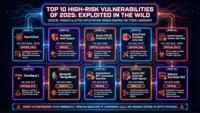
Top 10 High-Risk Vulnerabilities Of 2025 that Exploited in the Wild
The cybersecurity landscape in 2025 has been marked by an unprecedented surge in critical vulnerabilities, with over 21,500 CVEs disclosed in the first half of the year alone, representing a 16-18% in ... Read more

-
BleepingComputer
Fortinet warns of 5-year-old FortiOS 2FA bypass still exploited in attacks
Fortinet has warned customers that threat actors are still actively exploiting a critical FortiOS vulnerability that allows them to bypass two-factor authentication (2FA) when targeting vulnerable For ... Read more

-
BleepingComputer
Over 25,000 FortiCloud SSO devices exposed to remote attacks
Internet security watchdog Shadowserver has found over 25,000 Fortinet devices exposed online with FortiCloud SSO enabled, amid ongoing attacks targeting a critical authentication bypass vulnerability ... Read more

-
Daily CyberSecurity
Cisco Zero-Day Siege: Chinese Group UAT-9686 Deploys ‘Aqua’ Malware via CVSS 10 Root Exploit
A critical zero-day vulnerability in Cisco’s secure email appliances is under active siege by a sophisticated Chinese hacking group, granting them total control over sensitive network gateways. The ca ... Read more

-
BleepingComputer
Fortinet warns of critical FortiCloud SSO login auth bypass flaws
Fortinet has released security updates to address two critical vulnerabilities in FortiOS, FortiWeb, FortiProxy, and FortiSwitchManager that could allow attackers to bypass FortiCloud SSO authenticati ... Read more

-
Daily CyberSecurity
High-Severity Duc Disk Tool Flaw (CVE-2025-13654) Risks DoS and Information Leak via Integer Underflow
A stack-based buffer overflow vulnerability has been discovered in Duc, a popular open-source tool used for indexing and visualizing disk usage on Linux systems. The flaw, tracked as CVE-2025-13654, w ... Read more
-
Daily CyberSecurity
High-Severity lz4-java Flaw (CVE-2025-66566) Leaks Uninitialized Memory During Decompression
A high-severity vulnerability has been unearthed in lz4-java, a widely used Java library for the LZ4 compression algorithm. Tracked as CVE-2025-66566, the flaw carries a CVSS score of 8.2, signaling a ... Read more
-
Daily CyberSecurity
Critical Cal.com Flaw (CVE-2025-66489, CVSS 9.9) Allows Authentication Bypass by Submitting Fake TOTP Codes
A severe security vulnerability has been uncovered in Cal.com, the popular open-source scheduling platform positioned as the successor to Calendly. The flaw, which carries a near-maximum severity rati ... Read more

-
Daily CyberSecurity
High-Severity WatchGuard Flaws Risk VPN DoS and RCE via IKEv2 Memory Corruption
WatchGuard Technologies has released a critical series of security advisories addressing five high-severity vulnerabilities across its Firebox product line. The flaws, which affect the Fireware OS, co ... Read more

-
Daily CyberSecurity
Spyware Vendor Intellexa Used 15 Zero-Days Since 2021, Deploying Predator via “smack” iOS Exploit Chain
The mercenary spyware industry remains a persistent and adaptable threat, with the notorious vendor Intellexa continuing to expand its arsenal despite facing significant geopolitical headwinds. A new ... Read more

-
Daily CyberSecurity
urllib3 Flaws Risk Client DoS via Unbounded Decompression and Streaming Resource Exhaustion
The maintainers of urllib3, the ubiquitous HTTP client for Python, have issued a security advisory detailing two high-severity vulnerabilities that could allow malicious servers to crash client applic ... Read more

-
Daily CyberSecurity
The PDF Trap: Critical Vulnerability (CVE-2025-66516, CVSS 10.0) Hits Apache Tika Core
The Apache Tika toolkit, the industry standard for detecting and extracting metadata from over a thousand file types, has issued a maximum-severity alert. A critical XML External Entity (XXE) vulnerab ... Read more

-
Daily CyberSecurity
“React2Shell” Storm: China-Nexus Groups Weaponize Critical React Flaw Hours After Disclosure
Only hours after the public disclosure of a critical vulnerability in the React ecosystem, state-sponsored cyber espionage groups have already launched active exploitation campaigns. Amazon threat int ... Read more
The following table lists the changes that have been made to the
CVE-2025-58034 vulnerability over time.
Vulnerability history details can be useful for understanding the evolution of a vulnerability, and for identifying the most recent changes that may impact the vulnerability's severity, exploitability, or other characteristics.
-
CVE Modified by 134c704f-9b21-4f2e-91b3-4a467353bcc0
Jun. 17, 2026
Action Type Old Value New Value Added SSVC {'id': 'CVE-2025-58034', 'role': 'CISA Coordinator', 'options': [{'exploitation': 'active'}, {'automatable': 'no'}, {'technicalImpact': 'total'}], 'version': '2.0.3', 'timestamp': '2025-11-19T04:55:37.672981Z'} -
CVE Modified by [email protected]
Jun. 17, 2026
Action Type Old Value New Value Added Affected [{'cpes': ['cpe:2.3:a:fortinet:fortiweb:7.6.4:*:*:*:*:*:*:*', 'cpe:2.3:a:fortinet:fortiweb:7.6.3:*:*:*:*:*:*:*', 'cpe:2.3:a:fortinet:fortiweb:7.6.2:*:*:*:*:*:*:*', 'cpe:2.3:a:fortinet:fortiweb:7.6.1:*:*:*:*:*:*:*', 'cpe:2.3:a:fortinet:fortiweb:7.6.0:*:*:*:*:*:*:*', 'cpe:2.3:a:fortinet:fortiweb:7.4.8:*:*:*:*:*:*:*', 'cpe:2.3:a:fortinet:fortiweb:7.4.7:*:*:*:*:*:*:*', 'cpe:2.3:a:fortinet:fortiweb:7.4.6:*:*:*:*:*:*:*', 'cpe:2.3:a:fortinet:fortiweb:7.4.5:*:*:*:*:*:*:*', 'cpe:2.3:a:fortinet:fortiweb:7.4.4:*:*:*:*:*:*:*', 'cpe:2.3:a:fortinet:fortiweb:7.4.3:*:*:*:*:*:*:*', 'cpe:2.3:a:fortinet:fortiweb:7.4.2:*:*:*:*:*:*:*', 'cpe:2.3:a:fortinet:fortiweb:7.4.1:*:*:*:*:*:*:*', 'cpe:2.3:a:fortinet:fortiweb:7.4.0:*:*:*:*:*:*:*', 'cpe:2.3:a:fortinet:fortiweb:7.2.11:*:*:*:*:*:*:*', 'cpe:2.3:a:fortinet:fortiweb:7.2.10:*:*:*:*:*:*:*', 'cpe:2.3:a:fortinet:fortiweb:7.2.9:*:*:*:*:*:*:*', 'cpe:2.3:a:fortinet:fortiweb:7.2.8:*:*:*:*:*:*:*', 'cpe:2.3:a:fortinet:fortiweb:7.2.7:*:*:*:*:*:*:*', 'cpe:2.3:a:fortinet:fortiweb:7.2.6:*:*:*:*:*:*:*', 'cpe:2.3:a:fortinet:fortiweb:7.2.5:*:*:*:*:*:*:*', 'cpe:2.3:a:fortinet:fortiweb:7.2.4:*:*:*:*:*:*:*', 'cpe:2.3:a:fortinet:fortiweb:7.2.3:*:*:*:*:*:*:*', 'cpe:2.3:a:fortinet:fortiweb:7.2.2:*:*:*:*:*:*:*', 'cpe:2.3:a:fortinet:fortiweb:7.2.1:*:*:*:*:*:*:*', 'cpe:2.3:a:fortinet:fortiweb:7.2.0:*:*:*:*:*:*:*', 'cpe:2.3:a:fortinet:fortiweb:7.0.11:*:*:*:*:*:*:*', 'cpe:2.3:a:fortinet:fortiweb:7.0.10:*:*:*:*:*:*:*', 'cpe:2.3:a:fortinet:fortiweb:7.0.9:*:*:*:*:*:*:*', 'cpe:2.3:a:fortinet:fortiweb:7.0.8:*:*:*:*:*:*:*', 'cpe:2.3:a:fortinet:fortiweb:7.0.7:*:*:*:*:*:*:*', 'cpe:2.3:a:fortinet:fortiweb:7.0.6:*:*:*:*:*:*:*', 'cpe:2.3:a:fortinet:fortiweb:7.0.5:*:*:*:*:*:*:*', 'cpe:2.3:a:fortinet:fortiweb:7.0.4:*:*:*:*:*:*:*', 'cpe:2.3:a:fortinet:fortiweb:7.0.3:*:*:*:*:*:*:*', 'cpe:2.3:a:fortinet:fortiweb:7.0.2:*:*:*:*:*:*:*'], 'vendor': 'Fortinet', 'product': 'FortiWeb', 'versions': [{'status': 'affected', 'version': '7.6.0', 'versionType': 'semver', 'lessThanOrEqual': '7.6.4'}, {'status': 'affected', 'version': '7.4.0', 'versionType': 'semver', 'lessThanOrEqual': '7.4.8'}, {'status': 'affected', 'version': '7.2.0', 'versionType': 'semver', 'lessThanOrEqual': '7.2.11'}, {'status': 'affected', 'version': '7.0.2', 'versionType': 'semver', 'lessThanOrEqual': '7.0.11'}], 'defaultStatus': 'unaffected'}] -
Modified Analysis by [email protected]
Nov. 21, 2025
Action Type Old Value New Value -
CVE Modified by [email protected]
Nov. 20, 2025
Action Type Old Value New Value Changed Description An Improper Neutralization of Special Elements used in an OS Command ('OS Command Injection') vulnerability [CWE-78] in Fortinet FortiWeb 8.0.0 through 8.0.1, FortiWeb 7.6.0 through 7.6.5, FortiWeb 7.4.0 through 7.4.10, FortiWeb 7.2.0 through 7.2.11, FortiWeb 7.0.0 through 7.0.11 may allow an authenticated attacker to execute unauthorized code on the underlying system via crafted HTTP requests or CLI commands. An Improper Neutralization of Special Elements used in an OS Command ('OS Command Injection') vulnerability [CWE-78] vulnerability in Fortinet FortiWeb 8.0.0 through 8.0.1, FortiWeb 7.6.0 through 7.6.5, FortiWeb 7.4.0 through 7.4.10, FortiWeb 7.2.0 through 7.2.11, FortiWeb 7.0.0 through 7.0.11 may allow an authenticated attacker to execute unauthorized code on the underlying system via crafted HTTP requests or CLI commands. -
Initial Analysis by [email protected]
Nov. 19, 2025
Action Type Old Value New Value Added CPE Configuration OR *cpe:2.3:a:fortinet:fortiweb:*:*:*:*:*:*:*:* versions from (including) 7.0.0 up to (excluding) 7.0.12 *cpe:2.3:a:fortinet:fortiweb:*:*:*:*:*:*:*:* versions from (including) 7.2.0 up to (excluding) 7.2.12 *cpe:2.3:a:fortinet:fortiweb:*:*:*:*:*:*:*:* versions from (including) 8.0.0 up to (excluding) 8.0.2 *cpe:2.3:a:fortinet:fortiweb:*:*:*:*:*:*:*:* versions from (including) 7.4.0 up to (excluding) 7.4.11 *cpe:2.3:a:fortinet:fortiweb:*:*:*:*:*:*:*:* versions from (including) 7.6.0 up to (excluding) 7.6.6 Added Reference Type Fortinet, Inc.: https://fortiguard.fortinet.com/psirt/FG-IR-25-513 Types: Vendor Advisory Added Reference Type CISA-ADP: https://www.cisa.gov/known-exploited-vulnerabilities-catalog?field_cve=CVE-2025-58034 Types: US Government Resource -
CVE CISA KEV Update by 9119a7d8-5eab-497f-8521-727c672e3725
Nov. 19, 2025
Action Type Old Value New Value Added Date Added 2025-11-18 Added Due Date 2025-11-25 Added Required Action Apply mitigations per vendor instructions, follow applicable BOD 22-01 guidance for cloud services, or discontinue use of the product if mitigations are unavailable. Added Vulnerability Name Fortinet FortiWeb OS Command Injection Vulnerability -
CVE Modified by 134c704f-9b21-4f2e-91b3-4a467353bcc0
Nov. 18, 2025
Action Type Old Value New Value Added Reference https://www.cisa.gov/known-exploited-vulnerabilities-catalog?field_cve=CVE-2025-58034 -
New CVE Received by [email protected]
Nov. 18, 2025
Action Type Old Value New Value Added Description An Improper Neutralization of Special Elements used in an OS Command ('OS Command Injection') vulnerability [CWE-78] in Fortinet FortiWeb 8.0.0 through 8.0.1, FortiWeb 7.6.0 through 7.6.5, FortiWeb 7.4.0 through 7.4.10, FortiWeb 7.2.0 through 7.2.11, FortiWeb 7.0.0 through 7.0.11 may allow an authenticated attacker to execute unauthorized code on the underlying system via crafted HTTP requests or CLI commands. Added CVSS V3.1 AV:N/AC:L/PR:H/UI:N/S:U/C:H/I:H/A:H Added CWE CWE-78 Added Reference https://fortiguard.fortinet.com/psirt/FG-IR-25-513