


CVE-2026-39842
OpenRemote is Vulnerable to Expression Injection
Description
OpenRemote is an open-source IoT platform. Versions 1.21.0 and below contain two interrelated expression injection vulnerabilities in the rules engine that allow arbitrary code execution on the server. The JavaScript rules engine executes user-supplied scripts via Nashorn's ScriptEngine.eval() without sandboxing, class filtering, or access restrictions, and the authorization check in RulesResourceImpl only restricts Groovy rules to superusers while leaving JavaScript rules unrestricted for any user with the write:rules role. Additionally, the Groovy rules engine has a GroovyDenyAllFilter security filter that is defined but never registered, as the registration code is commented out, rendering the SandboxTransformer ineffective for superuser-created Groovy rules. A non-superuser attacker with the write:rules role can create JavaScript rulesets that execute with full JVM access, enabling remote code execution as root, arbitrary file read, environment variable theft including database credentials, and complete multi-tenant isolation bypass to access data across all realms. This issue has been fixed in version 1.22.0.
INFO
Published Date :
April 15, 2026, 4:17 a.m.
Last Modified :
June 17, 2026, 10:42 a.m.
Remotely Exploit :
Yes !
Source :
[email protected]
CVSS Scores
| Score | Version | Severity | Vector | Exploitability Score | Impact Score | Source |
|---|---|---|---|---|---|---|
| CVSS | 134c704f-9b21-4f2e-91b3-4a467353bcc0 | |||||
| CVSS 3.1 | CRITICAL | MITRE-CVE | ||||
| CVSS 3.1 | CRITICAL | [email protected] |
Solution
- Update OpenRemote to version 1.22.0.
- Review and restrict rule creation permissions.
- Validate all user-supplied scripts.
- Apply security patches promptly.
Public PoC/Exploit Available at Github
CVE-2026-39842 has a 1 public
PoC/Exploit available at Github.
Go to the Public Exploits tab to see the list.
References to Advisories, Solutions, and Tools
Here, you will find a curated list of external links that provide in-depth
information, practical solutions, and valuable tools related to
CVE-2026-39842.
| URL | Resource |
|---|---|
| https://github.com/openremote/openremote/releases/tag/1.22.0 | Product Release Notes |
| https://github.com/openremote/openremote/security/advisories/GHSA-7mqr-33rv-p3mp | Exploit Vendor Advisory |
CWE - Common Weakness Enumeration
While CVE identifies
specific instances of vulnerabilities, CWE categorizes the common flaws or
weaknesses that can lead to vulnerabilities. CVE-2026-39842 is
associated with the following CWEs:
Common Attack Pattern Enumeration and Classification (CAPEC)
Common Attack Pattern Enumeration and Classification
(CAPEC)
stores attack patterns, which are descriptions of the common attributes and
approaches employed by adversaries to exploit the CVE-2026-39842
weaknesses.
We scan GitHub repositories to detect new proof-of-concept exploits. Following list is a collection of public exploits and proof-of-concepts, which have been published on GitHub (sorted by the most recently updated).

Critical remote code execution vulnerability in OpenRemote's Rules Engine allows authenticated users with `write:rules` role to execute arbitrary code on the server with root privileges.
Python Lua
Results are limited to the first 15 repositories due to potential performance issues.
The following list is the news that have been mention
CVE-2026-39842 vulnerability anywhere in the article.
-
 Daily CyberSecurity
IoT Under Fire: Critical CVSS 10 Expression Injection Hits OpenRemote Platform
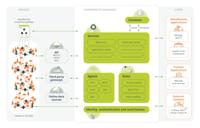
Security researchers have sounded a major alarm for the internet-of-things (IoT) sector as OpenRemote, a popular 100% open-source management platform, disclosed a maximum-severity vulnerability. The f ... Read more
The following table lists the changes that have been made to the
CVE-2026-39842 vulnerability over time.
Vulnerability history details can be useful for understanding the evolution of a vulnerability, and for identifying the most recent changes that may impact the vulnerability's severity, exploitability, or other characteristics.
-
CVE Modified by [email protected]
Jun. 17, 2026
Action Type Old Value New Value Added Affected [{'vendor': 'openremote', 'product': 'openremote', 'versions': [{'status': 'affected', 'version': '< 1.22.0'}]}] -
CVE Modified by 134c704f-9b21-4f2e-91b3-4a467353bcc0
Jun. 17, 2026
Action Type Old Value New Value Added SSVC {'id': 'CVE-2026-39842', 'role': 'CISA Coordinator', 'options': [{'exploitation': 'poc'}, {'automatable': 'no'}, {'technicalImpact': 'total'}], 'version': '2.0.3', 'timestamp': '2026-04-16T13:58:20.241436Z'} -
Initial Analysis by [email protected]
Apr. 23, 2026
Action Type Old Value New Value Added CPE Configuration OR *cpe:2.3:a:openremote:openremote:*:*:*:*:*:*:*:* versions up to (excluding) 1.22.0 Added Reference Type GitHub, Inc.: https://github.com/openremote/openremote/releases/tag/1.22.0 Types: Product, Release Notes Added Reference Type GitHub, Inc.: https://github.com/openremote/openremote/security/advisories/GHSA-7mqr-33rv-p3mp Types: Exploit, Vendor Advisory -
New CVE Received by [email protected]
Apr. 15, 2026
Action Type Old Value New Value Added Description OpenRemote is an open-source IoT platform. Versions 1.21.0 and below contain two interrelated expression injection vulnerabilities in the rules engine that allow arbitrary code execution on the server. The JavaScript rules engine executes user-supplied scripts via Nashorn's ScriptEngine.eval() without sandboxing, class filtering, or access restrictions, and the authorization check in RulesResourceImpl only restricts Groovy rules to superusers while leaving JavaScript rules unrestricted for any user with the write:rules role. Additionally, the Groovy rules engine has a GroovyDenyAllFilter security filter that is defined but never registered, as the registration code is commented out, rendering the SandboxTransformer ineffective for superuser-created Groovy rules. A non-superuser attacker with the write:rules role can create JavaScript rulesets that execute with full JVM access, enabling remote code execution as root, arbitrary file read, environment variable theft including database credentials, and complete multi-tenant isolation bypass to access data across all realms. This issue has been fixed in version 1.22.0. Added CVSS V3.1 AV:N/AC:L/PR:L/UI:N/S:C/C:H/I:H/A:H Added CWE CWE-94 Added CWE CWE-917 Added Reference https://github.com/openremote/openremote/releases/tag/1.22.0 Added Reference https://github.com/openremote/openremote/security/advisories/GHSA-7mqr-33rv-p3mp