


CVE-2026-50549
Cursor Desktop sandbox escape via symlink and failed path canonicalization
Description
Cursor is a code editor built for programming with AI. Prior to 3.0, Cursor runs agent terminal commands in a sandbox by default. Before a Write, the agent canonicalizes the target path to confirm it stays inside the workspace, but when canonicalization fails it falls back to the original path and writes without approval. A malicious agent can create an in-workspace symlink that points outside the workspace and force canonicalization to fail — either because the target does not exist or because read permission is removed from the path — so the agent writes through the symlink to an arbitrary location without approval. A malicious agent could write arbitrary files outside the workspace under the user's privileges. This enables non-sandboxed Remote Code Execution — for example by overwriting the cursorsandbox helper so later commands run unsandboxed — with no user interaction beyond a benign prompt. This vulnerability is fixed in 3.0.
INFO
Published Date :
June 25, 2026, 7:16 p.m.
Last Modified :
June 26, 2026, 4:51 p.m.
Remotely Exploit :
Yes !
Source :
[email protected]
CVSS Scores
| Score | Version | Severity | Vector | Exploitability Score | Impact Score | Source |
|---|---|---|---|---|---|---|
| CVSS | 134c704f-9b21-4f2e-91b3-4a467353bcc0 | |||||
| CVSS 3.1 | CRITICAL | [email protected] | ||||
| CVSS 4.0 | CRITICAL | [email protected] |
Solution
- Update Cursor to version 3.0 or later.
- Review agent configurations for path canonicalization.
- Verify symlink targets are within the workspace.
- Ensure file system permissions restrict access.
Public PoC/Exploit Available at Github
CVE-2026-50549 has a 3 public
PoC/Exploit available at Github.
Go to the Public Exploits tab to see the list.
References to Advisories, Solutions, and Tools
Here, you will find a curated list of external links that provide in-depth
information, practical solutions, and valuable tools related to
CVE-2026-50549.
| URL | Resource |
|---|---|
| https://github.com/cursor/cursor/security/advisories/GHSA-3v8f-48vw-3mjx | Vendor Advisory |
CWE - Common Weakness Enumeration
While CVE identifies
specific instances of vulnerabilities, CWE categorizes the common flaws or
weaknesses that can lead to vulnerabilities. CVE-2026-50549 is
associated with the following CWEs:
Common Attack Pattern Enumeration and Classification (CAPEC)
Common Attack Pattern Enumeration and Classification
(CAPEC)
stores attack patterns, which are descriptions of the common attributes and
approaches employed by adversaries to exploit the CVE-2026-50549
weaknesses.
We scan GitHub repositories to detect new proof-of-concept exploits. Following list is a collection of public exploits and proof-of-concepts, which have been published on GitHub (sorted by the most recently updated).

None
Go CSS HTML Open Policy Agent Gherkin Shell JavaScript PowerShell

None
Python Jinja Batchfile Shell

A curated timeline of real AI agent security incidents, breaches, and vulnerabilities (2024-2026). Every entry sourced and dated.
ai-agent-security ai-agents ai-security awesome-list cybersecurity llm-security mcp-security prompt-injection supply-chain-security adversarial-attacks agent-security agentic-ai ai-attacks ai-safety cve incident-response owasp red-team security-research vulnerability
Results are limited to the first 15 repositories due to potential performance issues.
The following list is the news that have been mention
CVE-2026-50549 vulnerability anywhere in the article.

-
 The Hacker News
GhostApproval Symlink Flaws Could Let Malicious Repos Run Code in AI Coding Agents
Researchers at Wiz found that a flaw in six popular AI coding assistants lets a booby-trapped code project quietly take control of a developer's computer. The assistant asks permission to edit one har ... Read more
-
The Hacker News
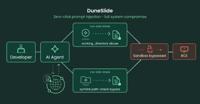
Critical Cursor Flaws Could Let Prompt Injection Escape Sandbox and Run Commands
Two flaws in Cursor, an AI code editor, could let a single, ordinary-looking prompt break out of the editor's safety sandbox and run any command on a developer's computer. There is no click to fall fo ... Read more
The following table lists the changes that have been made to the
CVE-2026-50549 vulnerability over time.
Vulnerability history details can be useful for understanding the evolution of a vulnerability, and for identifying the most recent changes that may impact the vulnerability's severity, exploitability, or other characteristics.
-
Initial Analysis by [email protected]
Jun. 26, 2026
Action Type Old Value New Value Added CVSS V3.1 AV:N/AC:L/PR:N/UI:N/S:U/C:H/I:H/A:H Added CPE Configuration OR *cpe:2.3:a:anysphere:cursor:*:*:*:*:*:*:*:* versions up to (excluding) 3.0 Added Reference Type GitHub, Inc.: https://github.com/cursor/cursor/security/advisories/GHSA-3v8f-48vw-3mjx Types: Vendor Advisory -
CVE Modified by 134c704f-9b21-4f2e-91b3-4a467353bcc0
Jun. 25, 2026
Action Type Old Value New Value Added SSVC {'id': 'CVE-2026-50549', 'role': 'CISA Coordinator', 'options': [{'exploitation': 'none'}, {'automatable': 'yes'}, {'technicalImpact': 'total'}], 'version': '2.0.3', 'timestamp': '2026-06-25T19:02:16.377893Z'} -
New CVE Received by [email protected]
Jun. 25, 2026
Action Type Old Value New Value Added Affected [{'vendor': 'cursor', 'product': 'cursor', 'versions': [{'status': 'affected', 'version': '< 3.0'}]}] Added Description Cursor is a code editor built for programming with AI. Prior to 3.0, Cursor runs agent terminal commands in a sandbox by default. Before a Write, the agent canonicalizes the target path to confirm it stays inside the workspace, but when canonicalization fails it falls back to the original path and writes without approval. A malicious agent can create an in-workspace symlink that points outside the workspace and force canonicalization to fail — either because the target does not exist or because read permission is removed from the path — so the agent writes through the symlink to an arbitrary location without approval. A malicious agent could write arbitrary files outside the workspace under the user's privileges. This enables non-sandboxed Remote Code Execution — for example by overwriting the cursorsandbox helper so later commands run unsandboxed — with no user interaction beyond a benign prompt. This vulnerability is fixed in 3.0. Added CVSS V4.0 AV:N/AC:L/AT:N/PR:N/UI:N/VC:H/VI:H/VA:H/SC:N/SI:N/SA:N/E:X/CR:X/IR:X/AR:X/MAV:X/MAC:X/MAT:X/MPR:X/MUI:X/MVC:X/MVI:X/MVA:X/MSC:X/MSI:X/MSA:X/S:X/AU:X/R:X/V:X/RE:X/U:X Added CWE CWE-59 Added Reference https://github.com/cursor/cursor/security/advisories/GHSA-3v8f-48vw-3mjx