


CVE-2026-64650
AI SDK Codex Harness Tool Relay Authorization Bypass
Description
The `@ai-sdk/harness-opencode` tool is an HarnessV1 adapter backed by @openai/codex-sdk, which drives the codex command line interface. Prior to version 1.0.29, the tool relay authorizes requests from any process whose command line contains an allowed helper script path (the Codex CLI shim). This allows untrusted code executing in the sandbox to invoke arbitrary host-exposed tools, including secret lookups, deployment operations, and cloud API calls without a corresponding model-authorized tool-call event. Exploitation requires a Linux environment (the vulnerable fallback checks `process.platform === 'linux'` and reads `/proc`); an active harness session with one or more host-provided tools; and untrusted code executing in the sandbox (e.g. a malicious dependency, build script, or lifecycle hook) The fix in version 1.0.29 removes the process-path authorization fallback entirely. Relay requests are now only accepted after exact, short-lived, one-time authorization matching the tool name and input from a bridge-observed model event. Some workarounds are available. Do not run the Codex harness on untrusted repositories or with untrusted dependencies, and/or limit host-exposed tools to non-sensitive operations when working with untrusted code.
INFO
Published Date :
July 20, 2026, 9:16 p.m.
Last Modified :
July 23, 2026, 6:14 p.m.
Remotely Exploit :
No
Source :
[email protected]
CVSS Scores
| Score | Version | Severity | Vector | Exploitability Score | Impact Score | Source |
|---|---|---|---|---|---|---|
| CVSS | 134c704f-9b21-4f2e-91b3-4a467353bcc0 | |||||
| CVSS 4.0 | MEDIUM | [email protected] |
Solution
- Update the harness tool to version 1.0.29 or later.
- Avoid running the harness on untrusted repositories.
- Limit host-exposed tools for untrusted code.
- Use workarounds if update is not possible.
References to Advisories, Solutions, and Tools
Here, you will find a curated list of external links that provide in-depth
information, practical solutions, and valuable tools related to
CVE-2026-64650.
| URL | Resource |
|---|---|
| https://github.com/vercel/ai/pull/17105 | |
| https://github.com/vercel/ai/security/advisories/GHSA-qw9h-448j-6rph |
CWE - Common Weakness Enumeration
While CVE identifies
specific instances of vulnerabilities, CWE categorizes the common flaws or
weaknesses that can lead to vulnerabilities. CVE-2026-64650 is
associated with the following CWEs:
Common Attack Pattern Enumeration and Classification (CAPEC)
Common Attack Pattern Enumeration and Classification
(CAPEC)
stores attack patterns, which are descriptions of the common attributes and
approaches employed by adversaries to exploit the CVE-2026-64650
weaknesses.
We scan GitHub repositories to detect new proof-of-concept exploits. Following list is a collection of public exploits and proof-of-concepts, which have been published on GitHub (sorted by the most recently updated).
Results are limited to the first 15 repositories due to potential performance issues.
The following list is the news that have been mention
CVE-2026-64650 vulnerability anywhere in the article.
-
 The Hacker News
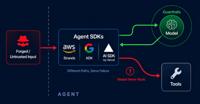
AWS, Google, and Vercel Agent Flaws Let Attackers Trigger Tools Without Running the Model
Security flaws in agent infrastructure from Amazon Web Services (AWS), Google, and Vercel let untrusted or forged instructions reach an agent's tools with no check that a model turn had authorized the ... Read more
The following table lists the changes that have been made to the
CVE-2026-64650 vulnerability over time.
Vulnerability history details can be useful for understanding the evolution of a vulnerability, and for identifying the most recent changes that may impact the vulnerability's severity, exploitability, or other characteristics.
-
CVE Modified by 134c704f-9b21-4f2e-91b3-4a467353bcc0
Jul. 20, 2026
Action Type Old Value New Value Added SSVC {'id': 'CVE-2026-64650', 'role': 'CISA Coordinator', 'options': [{'exploitation': 'none'}, {'automatable': 'no'}, {'technicalImpact': 'partial'}], 'version': '2.0.3', 'timestamp': '2026-07-20T21:45:38.151412Z'} -
New CVE Received by [email protected]
Jul. 20, 2026
Action Type Old Value New Value Added Affected [{'vendor': 'vercel', 'product': '@ai-sdk/harness-codex', 'versions': [{'status': 'affected', 'version': '< 1.0.29'}]}] Added Description The `@ai-sdk/harness-opencode` tool is an HarnessV1 adapter backed by @openai/codex-sdk, which drives the codex command line interface. Prior to version 1.0.29, the tool relay authorizes requests from any process whose command line contains an allowed helper script path (the Codex CLI shim). This allows untrusted code executing in the sandbox to invoke arbitrary host-exposed tools, including secret lookups, deployment operations, and cloud API calls without a corresponding model-authorized tool-call event. Exploitation requires a Linux environment (the vulnerable fallback checks `process.platform === 'linux'` and reads `/proc`); an active harness session with one or more host-provided tools; and untrusted code executing in the sandbox (e.g. a malicious dependency, build script, or lifecycle hook) The fix in version 1.0.29 removes the process-path authorization fallback entirely. Relay requests are now only accepted after exact, short-lived, one-time authorization matching the tool name and input from a bridge-observed model event. Some workarounds are available. Do not run the Codex harness on untrusted repositories or with untrusted dependencies, and/or limit host-exposed tools to non-sensitive operations when working with untrusted code. Added CVSS V4.0 AV:L/AC:L/AT:N/PR:N/UI:N/VC:N/VI:L/VA:N/SC:H/SI:H/SA:N/E:X/CR:X/IR:X/AR:X/MAV:X/MAC:X/MAT:X/MPR:X/MUI:X/MVC:X/MVI:X/MVA:X/MSC:X/MSI:X/MSA:X/S:X/AU:X/R:X/V:X/RE:X/U:X Added CWE CWE-863 Added Reference https://github.com/vercel/ai/pull/17105 Added Reference https://github.com/vercel/ai/security/advisories/GHSA-qw9h-448j-6rph