


CVE-2026-4370
Improper TLS Client/Server authentication and certificate verification on Database Cluster
Description
A vulnerability was identified in Juju from version 3.2.0 until 3.6.19 and from version 4.0 until 4.0.4, where the internal Dqlite database cluster fails to perform proper TLS client and server authentication. Specifically, the Juju controller's database endpoint does not validate client certificates when a new node attempts to join the cluster. An unauthenticated attacker with network reachability to the Juju controller's Dqlite port can exploit this flaw to join the database cluster. Once joined, the attacker gains full read and write access to the underlying database, allowing for total data compromise.
INFO
Published Date :
April 1, 2026, 9:16 a.m.
Last Modified :
June 17, 2026, 10:56 a.m.
Remotely Exploit :
Yes !
Source :
[email protected]
CVSS Scores
| Score | Version | Severity | Vector | Exploitability Score | Impact Score | Source |
|---|---|---|---|---|---|---|
| CVSS | 134c704f-9b21-4f2e-91b3-4a467353bcc0 | |||||
| CVSS 3.1 | CRITICAL | cc1ad9ee-3454-478d-9317-d3e869d708bc | ||||
| CVSS 3.1 | CRITICAL | [email protected] |
Solution
- Update Juju to a version after 3.6.19 or 4.0.4.
- Ensure TLS is correctly configured for the Dqlite database cluster.
- Validate client certificate authentication for new cluster nodes.
References to Advisories, Solutions, and Tools
Here, you will find a curated list of external links that provide in-depth
information, practical solutions, and valuable tools related to
CVE-2026-4370.
| URL | Resource |
|---|---|
| https://github.com/juju/juju/security/advisories/GHSA-gvrj-cjch-728p | Exploit Vendor Advisory |
CWE - Common Weakness Enumeration
While CVE identifies
specific instances of vulnerabilities, CWE categorizes the common flaws or
weaknesses that can lead to vulnerabilities. CVE-2026-4370 is
associated with the following CWEs:
Common Attack Pattern Enumeration and Classification (CAPEC)
Common Attack Pattern Enumeration and Classification
(CAPEC)
stores attack patterns, which are descriptions of the common attributes and
approaches employed by adversaries to exploit the CVE-2026-4370
weaknesses.
We scan GitHub repositories to detect new proof-of-concept exploits. Following list is a collection of public exploits and proof-of-concepts, which have been published on GitHub (sorted by the most recently updated).
Results are limited to the first 15 repositories due to potential performance issues.
The following list is the news that have been mention
CVE-2026-4370 vulnerability anywhere in the article.

-
 Daily CyberSecurity
Juju’s CVSS 10 Flaw Hands Over Master Cloud Credentials
Juju, the popular open-source application orchestration engine, is facing a critical security emergency. A newly discovered vulnerability, carrying the maximum possible severity rating of CVSS 10, all ... Read more

-
Daily CyberSecurity
CVE-2026-4370 (CVSS 10): Critical Juju Flaw Grants Attackers Total Infrastructure Control
The cybersecurity community is on high alert following the discovery of a critical security flaw in Juju, the popular open-source application orchestration engine. Labeled as CVE-2026-4370, the vulner ... Read more
-
Daily CyberSecurity
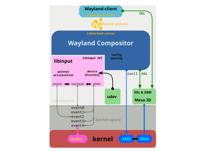
Breaking the Input: Sandbox Escape Hits libinput, Exposing Leading Linux Desktops
The core of modern Linux input handling is facing a significant security challenge. libinput, the essential library that manages everything from mouse clicks to touchpad gestures for display servers, ... Read more
The following table lists the changes that have been made to the
CVE-2026-4370 vulnerability over time.
Vulnerability history details can be useful for understanding the evolution of a vulnerability, and for identifying the most recent changes that may impact the vulnerability's severity, exploitability, or other characteristics.
-
CVE Modified by [email protected]
Jun. 17, 2026
Action Type Old Value New Value Added Affected [{'repo': 'https://github.com/juju/juju', 'vendor': 'Canonical', 'product': 'Juju', 'versions': [{'status': 'affected', 'version': '3.2.0', 'lessThan': '3.6.20', 'versionType': 'semver'}, {'status': 'affected', 'version': '4.0', 'lessThan': '4.0.4', 'versionType': 'semver'}], 'platforms': ['Linux'], 'packageName': 'juju', 'collectionURL': 'https://github.com/juju/', 'defaultStatus': 'unaffected'}] -
CVE Modified by 134c704f-9b21-4f2e-91b3-4a467353bcc0
Jun. 17, 2026
Action Type Old Value New Value Added SSVC {'id': 'CVE-2026-4370', 'role': 'CISA Coordinator', 'options': [{'exploitation': 'poc'}, {'automatable': 'yes'}, {'technicalImpact': 'total'}], 'version': '2.0.3', 'timestamp': '2026-04-01T13:00:31.628747Z'} -
Initial Analysis by [email protected]
Apr. 02, 2026
Action Type Old Value New Value Added CWE CWE-295 Added CPE Configuration OR *cpe:2.3:a:canonical:juju:*:*:*:*:*:*:*:* versions from (including) 3.2.0 up to (excluding) 3.6.20 *cpe:2.3:a:canonical:juju:*:*:*:*:*:*:*:* versions from (including) 4.0 up to (excluding) 4.0.5 Added Reference Type Canonical Ltd.: https://github.com/juju/juju/security/advisories/GHSA-gvrj-cjch-728p Types: Exploit, Vendor Advisory -
New CVE Received by [email protected]
Apr. 01, 2026
Action Type Old Value New Value Added Description A vulnerability was identified in Juju from version 3.2.0 until 3.6.19 and from version 4.0 until 4.0.4, where the internal Dqlite database cluster fails to perform proper TLS client and server authentication. Specifically, the Juju controller's database endpoint does not validate client certificates when a new node attempts to join the cluster. An unauthenticated attacker with network reachability to the Juju controller's Dqlite port can exploit this flaw to join the database cluster. Once joined, the attacker gains full read and write access to the underlying database, allowing for total data compromise. Added CVSS V3.1 AV:N/AC:L/PR:N/UI:N/S:C/C:H/I:H/A:H Added CWE CWE-295 Added CWE CWE-306 Added Reference https://github.com/juju/juju/security/advisories/GHSA-gvrj-cjch-728p